
Nova Scotia Will Charge for Provincial Nomination Applications From September 1: CAD $1,000 for Work Streams, $2,000 for Entrepreneur Streams
Nova Scotia announced on its immigration website on August 6, 2026 that it will begin charging application fees under the Nova Scotia Nominee Program (NSNP) on September 1, 2026, setting a flat CAD $1,000 fee for all three work streams and $2,000 for the entrepreneur streams, where until now the province charged nothing at all for a provincial nomination application; the fee applies only to candidates selected from the Expression of Interest (EOI) pool for assessment on or after September 1, leaving anyone who received a selection notice on or before August 31 unaffected, and work stream candidates must pay within seven calendar days of being selected while entrepreneur candidates get either 90 or 180 days depending on the pathway, with any EOI that misses the deadline closed and never assessed; the province's stated reason is that demand for nominations keeps outrunning the annual allocation Ottawa gives it — provincial open data shows the 2026 NSNP allocation at just 2,344 places, down more than 30 percent from 3,570 in 2024, while 7,942 unprocessed NSNP expressions of interest were still sitting in the pool at the end of the second quarter of 2026, roughly 3.4 times the entire year's allocation; submitting an EOI remains free, and the Atlantic Immigration Program (AIP) still carries no provincial application fee.
08/12/2026

Yukon Opens "Limited A" Licensing Pathway to Family Doctors From Four Countries, Dropping Practice Assessment and Supervision
The Government of Yukon announced on July 22, 2026 that internationally trained family physicians from the United States, the United Kingdom, Ireland and Australia can now be licensed in the territory through a new "Limited A" pathway that removes two long-standing requirements — a practice assessment and a supervised practice period — although applicants must still meet the Yukon Medical Council's other registration requirements and must already hold a specific practice opportunity in the territory. The change was triggered by a General Declaration of Need signed by Minister of Health and Social Services Brad Cathers under the Medical Profession Act and the Medical Profession Registration and Fees Regulation, and is aimed at a family doctor shortage Yukon has struggled with for years; the four source countries were chosen because their medical standards closely align with Canada's, and the list matches exactly the jurisdictions whose training and certification the College of Family Physicians of Canada (CFPC) currently recognizes, with the territory noting that the declaration will automatically extend to any additional countries the CFPC recognizes in future. The move is not an isolated one: Yukon had already partnered with the College of Physicians and Surgeons of British Columbia on a dual licensing application for U.S.-trained doctors on April 30, 2026, and in a separate release on July 23 the territorial government reported that 12 physicians have arrived or are about to arrive since November 2025 — nine already in place and three more due between August and September 2026 — while the territory's primary care waitlist fell from 4,606 people on January 26, 2026 to 2,445 on July 20, a drop of roughly 47 percent. Nationally, Yukon's decision echoes a three-year wave of licensing liberalization in British Columbia, Manitoba, Ontario and elsewhere, and dovetails with the targeted immigration measures for physicians Ottawa unveiled in December 2025. As of publication, Yukon had not released further details on the Limited A pathway or a date for applications to open.
07/29/2026

Nova Scotia Taps Express Entry to Match Skilled Workers With Employers Facing Critical Vacancies
Nova Scotia has launched a new initiative called "Critical Vacancies" and begun sending Notices of Interest (NOIs) to candidates in the federal Express Entry pool, with the aim of connecting qualified foreign skilled workers to local employers who have been unable to fill roles domestically. For now the initiative covers only two sectors with long-standing labour shortages — construction and healthcare — and while the province has uploaded dedicated forms for six construction occupations, it has not yet named any specific healthcare occupations. Candidates need only hold an active Express Entry profile to receive an NOI, with no requirement for Canadian or Nova Scotia work experience. Crucially, an NOI is neither an invitation to apply (ITA) for provincial nomination under the Provincial Nominee Program (PNP) nor an endorsement under the Atlantic Immigration Program (AIP); it functions instead as a bridge between job seekers and employers, though candidates who land a job offer through this channel are typically better positioned for a subsequent federal or provincial immigration pathway — and some may even receive an ITA directly in their Express Entry account. The move aligns with the provincial nomination priorities Nova Scotia announced in April 2026, and is the latest step in an immigration system the province has been steadily reshaping since late 2025.
05/22/2026

Canada Sets July 15 Launch for Sweeping Overhaul of Immigration Consultant Regulation, with First-Ever Compensation Fund for Victims
Canada's federal government announced on May 6, 2026 that a sweeping overhaul of the regulatory framework governing the College of Immigration and Citizenship Consultants (CICC) will come into force on July 15, 2026 — the most significant regulatory upgrade since the CICC succeeded the Immigration Consultants of Canada Regulatory Council (ICCRC) on November 23, 2021. The new rules give the College stronger disciplinary teeth, allow the federal government to step in and take over the College's board if it fails to protect the public, and establish, for the first time, a dedicated compensation fund to provide redress to clients who suffer financial losses because a CICC-licensed consultant engaged in theft, fraud, misappropriation of funds, misrepresentation, or refusal to cooperate with professional liability insurance; at the same time, the College's public register will be expanded with additional disclosures about each licensee, making it easier for the public to verify a consultant's licensing status, good standing, and disciplinary history — and squeezing the operating space of so-called "ghost consultants."
05/08/2026

Nova Scotia Overhauls Provincial Nominee and AIP Selection System with New EOI Model
On November 28, 2025, Nova Scotia announced a major shift in its immigration intake system, confirming that all submissions under the Nova Scotia Provincial Nominee Program (NSPNP) and the Atlantic Immigration Program (AIP) will now be processed through an Expression of Interest (EOI) model. Under the new rules, all submissions—regardless of submission date—are considered EOIs, and having a case ID or meeting eligibility criteria no longer guarantees file processing. The province will conduct periodic draws based on current labor market and economic priorities, with priority sectors such as healthcare, construction, trades, STEM, natural resources, and manufacturing. The shift aligns with broader trends driven by reduced provincial nomination allocations from IRCC. With increased immigration targets set for 2026, applicants may soon see improved chances of receiving selections.
12/03/2025

Yukon's Immigration Program Gets Boost with Increased 2025 Nomination Quota
The Government of Yukon announced on August 21, 2025, that it has successfully secured an additional 67 nomination allocations for its Yukon Nominee Program (YNP), raising the total for the year to 282. The boost follows sustained advocacy on behalf of local employers after initial federal cuts to the program. As a direct result, the territory will issue 80 new Invitations to Apply in August, prioritizing candidates with established ties to the Yukon, including local work experience and graduates from its institutions.
08/25/2025
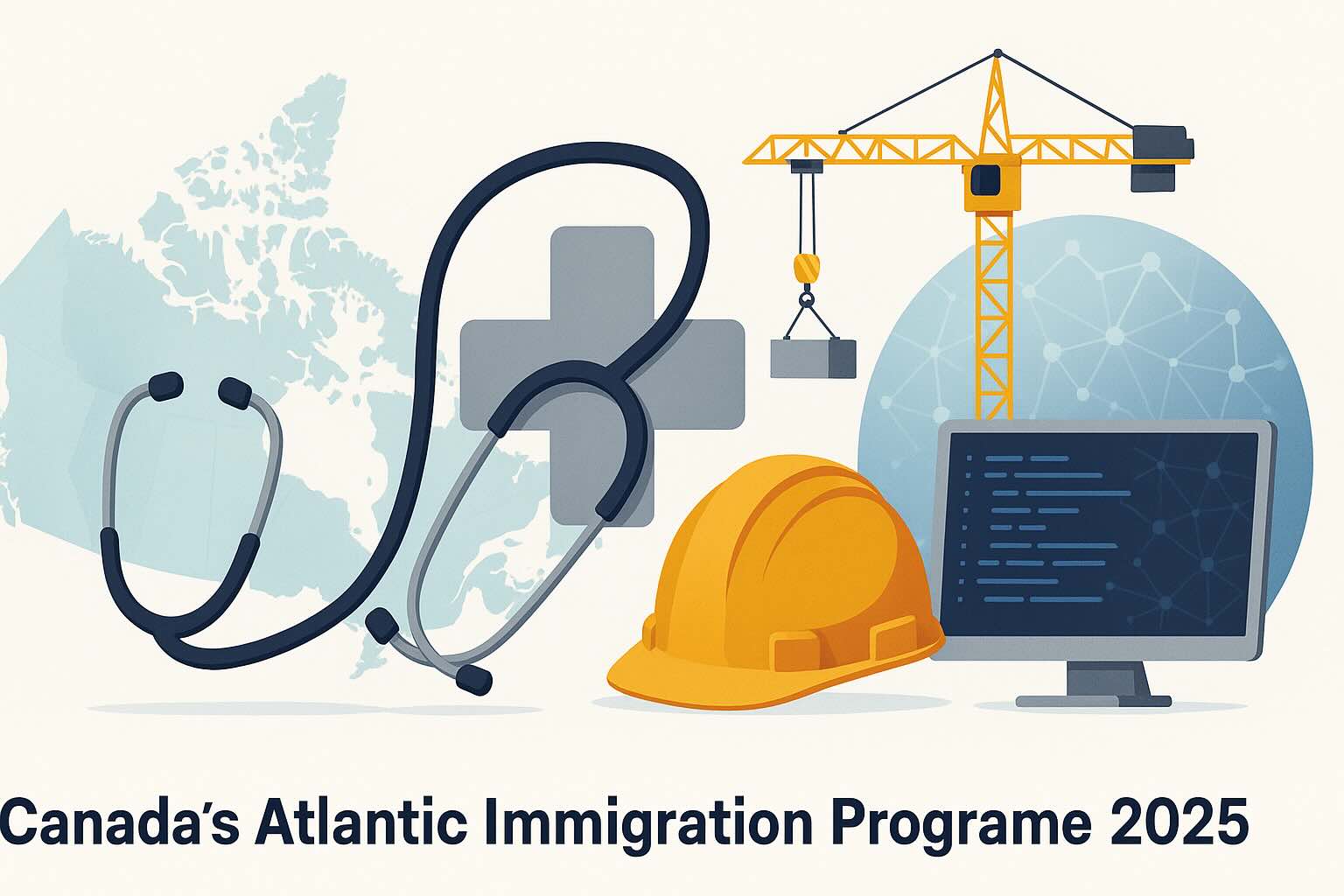
Canada's Atlantic Immigration Program: 2025 Updates See Provinces Prioritize Key Sectors and Occupations
In 2025, Canada's Atlantic Immigration Program (AIP) is entering a new strategic phase due to adjusted federal immigration allocations. To manage reduced quotas, the four Atlantic provinces are concentrating their resources on key sectors vital to their local economies. Healthcare, construction, and information technology have become focal points for attracting talent. This report provides an in-depth analysis of the latest priority sectors and occupations for each province, examines the alternative pathways available in New Brunswick following its AIP pause, and offers authoritative guidance for applicants planning to immigrate through this program in 2025.
08/21/2025
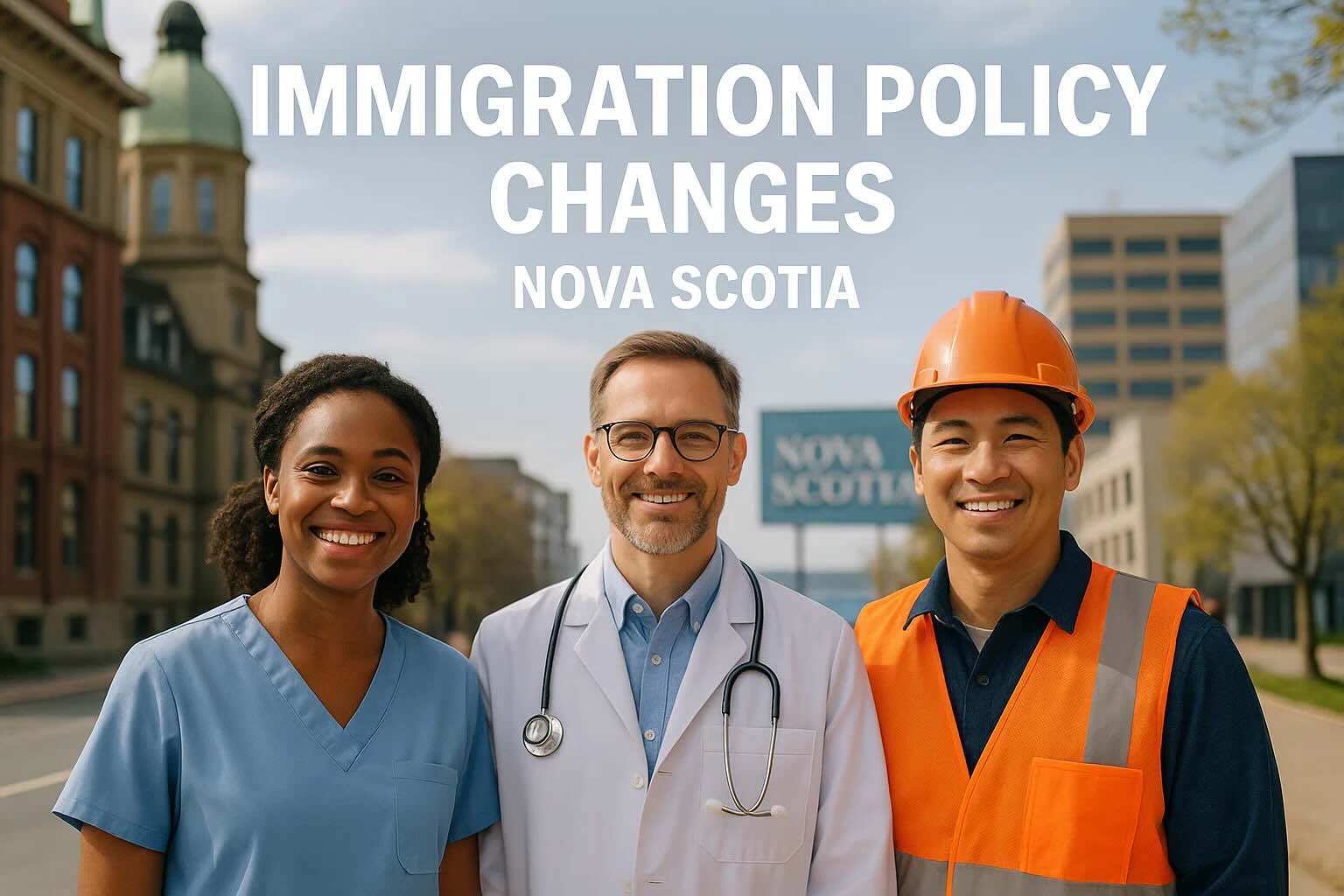
Nova Scotia Adjusts PNP Processing to Prioritize In-Province Applicants in Key Sectors
Nova Scotia's immigration authority issued an official notice on July 16, announcing an adjustment to its Provincial Nominee Program (NS PNP) application processing strategy. As the number of applications for 2025 has reached the annual allocation limit set by the federal government, the province has decided to shift its processing focus for the remainder of the year to applicants already working in the province whose work permits are set to expire in 2025, with a particular emphasis on professionals in the healthcare and construction sectors. This adjustment is a direct response to the federal government's reduced 2025 PNP allocation and will significantly impact various categories of applicants.
07/28/2025