
Nova Scotia Will Charge for Provincial Nomination Applications From September 1: CAD $1,000 for Work Streams, $2,000 for Entrepreneur Streams
Nova Scotia announced on its immigration website on August 6, 2026 that it will begin charging application fees under the Nova Scotia Nominee Program (NSNP) on September 1, 2026, setting a flat CAD $1,000 fee for all three work streams and $2,000 for the entrepreneur streams, where until now the province charged nothing at all for a provincial nomination application; the fee applies only to candidates selected from the Expression of Interest (EOI) pool for assessment on or after September 1, leaving anyone who received a selection notice on or before August 31 unaffected, and work stream candidates must pay within seven calendar days of being selected while entrepreneur candidates get either 90 or 180 days depending on the pathway, with any EOI that misses the deadline closed and never assessed; the province's stated reason is that demand for nominations keeps outrunning the annual allocation Ottawa gives it — provincial open data shows the 2026 NSNP allocation at just 2,344 places, down more than 30 percent from 3,570 in 2024, while 7,942 unprocessed NSNP expressions of interest were still sitting in the pool at the end of the second quarter of 2026, roughly 3.4 times the entire year's allocation; submitting an EOI remains free, and the Atlantic Immigration Program (AIP) still carries no provincial application fee.
08/12/2026

Atlantic Immigration Program Processing Time Falls 12 Months in a Single Month, Down to 26 Months
The latest figures from Immigration, Refugees and Citizenship Canada (IRCC) show that, as of June 8, 2026, the estimated processing time for new permanent residence (PR) applications under the Atlantic Immigration Program (AIP) stands at 26 months, a full 12 months below the 38 months posted on May 12 and the lowest reading since processing times surged in the fall of 2025. In October 2025, the AIP estimate jumped from 13 months in September to 37 months, a month-over-month increase of 184.6%, and it then hovered between 33 and 40 months for an extended period, far above IRCC's 11-month service standard. Because the dedicated work permits held by AIP applicants are capped at two years and these applicants are ineligible for bridging open work permits (BOWPs), many in-Canada applicants faced losing their authorization to work before a decision could be reached, prompting Atlantic provinces, led by New Brunswick, to step in with letters of support enabling applicants to obtain C18 closed work permits as an emergency stopgap. Despite the sharp improvement, 26 months is still roughly 2.4 times the service standard, and IRCC's inventory holds 12,900 pending AIP applications, about three times the 4,000 admissions targeted for 2026, meaning the backlog pressure is unlikely to ease fundamentally in the near term.
06/12/2026

BC PNP Issues 357 Invitations on June 2 as Cut-off Scores Fall Across Care and Construction Categories
On June 2, 2026, the British Columbia Provincial Nominee Program (BCPNP) held its 12th selection round of the year, issuing no fewer than 357 invitations to apply (ITAs) across its Skills Immigration (SI) and Entrepreneur Immigration (EI) categories. The SI draw accounted for 342 invitations targeting early childhood educators, healthcare and veterinary professionals, and construction trades workers under the province's Care and Build priorities announced on April 23, with minimum scores falling by 4 to 10 points across all four categories compared with the May 6 draw. On the entrepreneur side, the EI Base Stream issued 15 invitations—the largest single Base Stream round of 2026. As of June 2, British Columbia has issued 2,485 ITAs through the SI category and no fewer than 64 through the EI category this year.
06/05/2026

Nova Scotia Taps Express Entry to Match Skilled Workers With Employers Facing Critical Vacancies
Nova Scotia has launched a new initiative called "Critical Vacancies" and begun sending Notices of Interest (NOIs) to candidates in the federal Express Entry pool, with the aim of connecting qualified foreign skilled workers to local employers who have been unable to fill roles domestically. For now the initiative covers only two sectors with long-standing labour shortages — construction and healthcare — and while the province has uploaded dedicated forms for six construction occupations, it has not yet named any specific healthcare occupations. Candidates need only hold an active Express Entry profile to receive an NOI, with no requirement for Canadian or Nova Scotia work experience. Crucially, an NOI is neither an invitation to apply (ITA) for provincial nomination under the Provincial Nominee Program (PNP) nor an endorsement under the Atlantic Immigration Program (AIP); it functions instead as a bridge between job seekers and employers, though candidates who land a job offer through this channel are typically better positioned for a subsequent federal or provincial immigration pathway — and some may even receive an ITA directly in their Express Entry account. The move aligns with the provincial nomination priorities Nova Scotia announced in April 2026, and is the latest step in an immigration system the province has been steadily reshaping since late 2025.
05/22/2026

IRCC May Processing-Time Update: Express Entry and PNP Wait Times Climb Again, While AIP and Citizenship Renunciation Ease
On May 12, 2026, Immigration, Refugees and Citizenship Canada (IRCC) released its updated official processing times for permanent residence and citizenship applications, revealing a split picture in which most economic and citizenship streams lengthened while several family sponsorship and Atlantic categories eased. Under Express Entry, the Federal Skilled Worker Program (FSWP) climbed from six to seven months and the base Provincial Nominee Program (PNP) stretched from 13 to 14 months, with the Canadian Experience Class (CEC) inventory rising by 6,300 in a single month and the base PNP backlog growing by 2,100 — a continuation of the trend that has added more than 20,000 cases to the CEC queue since February 2026. At the same time, the Atlantic Immigration Program (AIP) eased from 40 to 38 months, the Parents and Grandparents Program (PGP) shortened by one month for both inside-Quebec and outside-Quebec applicants, and citizenship renunciation dropped sharply by three months to seven; however, citizenship grants reversed several months of acceleration, climbing from 12 to 13 months as the inventory grew by 7,900 to 321,100 applications, while Quebec's Business Class, the Start-Up Visa and the federal Self-Employed Persons Program all remained stuck at "more than 10 years" or 78 months.
05/13/2026

Canada Announces Pause on Home Care Worker Pilot Applications; Will Not Reopen in March 2026
Immigration, Refugees and Citizenship Canada (IRCC) released a statement on December 19, 2025, announcing an immediate pause on new applications for the Home Care Worker Pilots until further notice. The federal government explicitly stated that the programs will not reopen in March 2026 as originally planned, a decision that effectively cuts off a key immigration pathway that many prospective applicants had expected to utilize next year. This pause is part of the federal government's broader effort to recalibrate immigration quotas under the 2026–2028 Immigration Levels Plan, aiming to prevent further growth in application backlogs, ensure existing cases are prioritized, and make the immigration system more responsive to actual labour market needs.
12/27/2025

Nova Scotia Overhauls Provincial Nominee and AIP Selection System with New EOI Model
On November 28, 2025, Nova Scotia announced a major shift in its immigration intake system, confirming that all submissions under the Nova Scotia Provincial Nominee Program (NSPNP) and the Atlantic Immigration Program (AIP) will now be processed through an Expression of Interest (EOI) model. Under the new rules, all submissions—regardless of submission date—are considered EOIs, and having a case ID or meeting eligibility criteria no longer guarantees file processing. The province will conduct periodic draws based on current labor market and economic priorities, with priority sectors such as healthcare, construction, trades, STEM, natural resources, and manufacturing. The shift aligns with broader trends driven by reduced provincial nomination allocations from IRCC. With increased immigration targets set for 2026, applicants may soon see improved chances of receiving selections.
12/03/2025

Canada Closes Permanent Residence Pathway for Overseas Caregivers
Immigration, Refugees and Citizenship Canada (IRCC) recently updated its official website to indicate that the "applicants not working in Canada" stream under the Home Care Worker Immigration Pilots (HCWP) has been officially closed. This stream was marked as "closed" on September 29, 2025, without ever having opened to accept applications since the program's launch. Despite this closure, overseas caregivers still have alternative pathways to immigrate to Canada through Express Entry, Provincial Nominee Programs, and other routes. Industry analysts suggest this decision may be linked to severe application backlogs and the federal government's policy shift toward prioritizing the transition of temporary residents already in Canada to permanent residence status.
10/02/2025
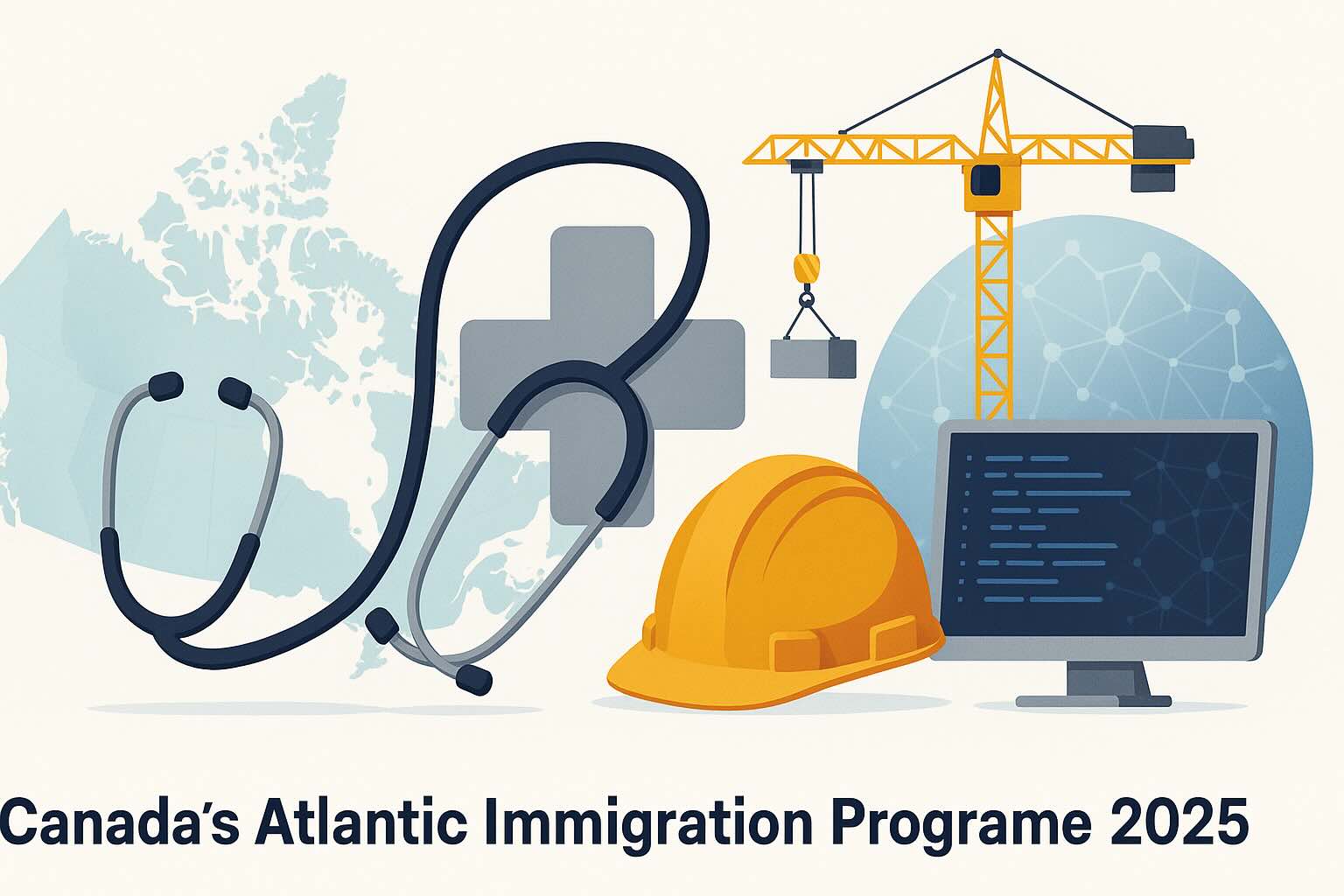
Canada's Atlantic Immigration Program: 2025 Updates See Provinces Prioritize Key Sectors and Occupations
In 2025, Canada's Atlantic Immigration Program (AIP) is entering a new strategic phase due to adjusted federal immigration allocations. To manage reduced quotas, the four Atlantic provinces are concentrating their resources on key sectors vital to their local economies. Healthcare, construction, and information technology have become focal points for attracting talent. This report provides an in-depth analysis of the latest priority sectors and occupations for each province, examines the alternative pathways available in New Brunswick following its AIP pause, and offers authoritative guidance for applicants planning to immigrate through this program in 2025.
08/21/2025

Nova Scotia Adjusts PNP Processing to Prioritize In-Province Applicants in Key Sectors
Nova Scotia's immigration authority issued an official notice on July 16, announcing an adjustment to its Provincial Nominee Program (NS PNP) application processing strategy. As the number of applications for 2025 has reached the annual allocation limit set by the federal government, the province has decided to shift its processing focus for the remainder of the year to applicants already working in the province whose work permits are set to expire in 2025, with a particular emphasis on professionals in the healthcare and construction sectors. This adjustment is a direct response to the federal government's reduced 2025 PNP allocation and will significantly impact various categories of applicants.
07/28/2025