
Atlantic Immigration Program Processing Time Falls 12 Months in a Single Month, Down to 26 Months
The latest figures from Immigration, Refugees and Citizenship Canada (IRCC) show that, as of June 8, 2026, the estimated processing time for new permanent residence (PR) applications under the Atlantic Immigration Program (AIP) stands at 26 months, a full 12 months below the 38 months posted on May 12 and the lowest reading since processing times surged in the fall of 2025. In October 2025, the AIP estimate jumped from 13 months in September to 37 months, a month-over-month increase of 184.6%, and it then hovered between 33 and 40 months for an extended period, far above IRCC's 11-month service standard. Because the dedicated work permits held by AIP applicants are capped at two years and these applicants are ineligible for bridging open work permits (BOWPs), many in-Canada applicants faced losing their authorization to work before a decision could be reached, prompting Atlantic provinces, led by New Brunswick, to step in with letters of support enabling applicants to obtain C18 closed work permits as an emergency stopgap. Despite the sharp improvement, 26 months is still roughly 2.4 times the service standard, and IRCC's inventory holds 12,900 pending AIP applications, about three times the 4,000 admissions targeted for 2026, meaning the backlog pressure is unlikely to ease fundamentally in the near term.
06/12/2026

IRCC May Processing-Time Update: Express Entry and PNP Wait Times Climb Again, While AIP and Citizenship Renunciation Ease
On May 12, 2026, Immigration, Refugees and Citizenship Canada (IRCC) released its updated official processing times for permanent residence and citizenship applications, revealing a split picture in which most economic and citizenship streams lengthened while several family sponsorship and Atlantic categories eased. Under Express Entry, the Federal Skilled Worker Program (FSWP) climbed from six to seven months and the base Provincial Nominee Program (PNP) stretched from 13 to 14 months, with the Canadian Experience Class (CEC) inventory rising by 6,300 in a single month and the base PNP backlog growing by 2,100 — a continuation of the trend that has added more than 20,000 cases to the CEC queue since February 2026. At the same time, the Atlantic Immigration Program (AIP) eased from 40 to 38 months, the Parents and Grandparents Program (PGP) shortened by one month for both inside-Quebec and outside-Quebec applicants, and citizenship renunciation dropped sharply by three months to seven; however, citizenship grants reversed several months of acceleration, climbing from 12 to 13 months as the inventory grew by 7,900 to 321,100 applications, while Quebec's Business Class, the Start-Up Visa and the federal Self-Employed Persons Program all remained stuck at "more than 10 years" or 78 months.
05/13/2026

Canada Issues 3,000 Invitations in First Express Entry Trades Draw of 2026
On April 2, 2026, Immigration, Refugees and Citizenship Canada (IRCC) conducted the year's first category-based Express Entry draw targeting Trades Occupations, issuing 3,000 invitations to apply (ITAs) with a minimum Comprehensive Ranking System (CRS) score of 477. The draw marks a significant milestone as the first Trades selection since IRCC raised the minimum work experience requirement from six months to one year in February 2026, and represents the twentieth Express Entry draw of the year. Notably, the 3,000 ITAs issued in this single draw already exceed the 1,250 total issued under the Trades category throughout all of 2025, underscoring IRCC's growing emphasis on skilled tradespeople. With 58,830 ITAs issued across all categories in 2026 so far, the Canadian Experience Class and French-language proficiency categories continue to account for the largest share.
04/03/2026

Five Immigration-Related Changes Took Effect Across Canada on January 1, 2026
As of January 1, 2026, several immigration and labour-market measures took effect across Canada. Graduate (master’s and PhD) students at public designated learning institutions (DLIs) no longer need a Provincial or Territorial Attestation Letter (PAL/TAL) for study permits and are no longer counted under the study permit cap, with PhD applicants eligible for expedited processing (as little as two weeks). The federal Start-Up Visa (SUV) program stopped accepting new applications at 11:59 p.m. on December 31, 2025, with a limited exception allowing applicants holding a designated organization commitment made in 2025 to apply until June 30, 2026; new SUV work permits are also no longer accepted, though current permit holders may be able to extend. Ontario introduced an “As of Right” framework enabling out-of-province credentialed professionals in regulated occupations to begin working in Ontario within 10 business days (for up to six months) after credential validation, and it implemented new job-posting rules prohibiting employers from requiring “Canadian work experience,” alongside additional disclosure measures such as whether AI is used in hiring. Alberta, meanwhile, tightened eligibility requirements for its AAIP Rural Renewal Stream, including stricter work-permit rules, residency requirements for lower-skilled occupations, caps on community endorsements, and a 12-month validity period for endorsement letters.
01/04/2026

Canada Suspends Entrepreneur Immigration Programs, Plans New Permanent Residence Pilot
Canada’s federal immigration department has announced major adjustments to its business immigration programs, including the suspension of new applications under the Start-up Visa Program and the continued pause of the Self-Employed Persons Program. The measures are intended to reduce application backlogs and prepare for a more targeted entrepreneur immigration pilot, details of which are expected to be released in 2026.
12/20/2025

Overview of Canada’s Business Immigration Pathways: Federal and Provincial Options for Investors and Entrepreneurs
Canada offers multiple immigration pathways for individuals who wish to immigrate through entrepreneurship or business investment, including the federal Start-Up Visa (SUV), several federal work permit categories, provincial entrepreneur programs, and the Quebec Immigrant Investor Program. Each pathway carries distinct requirements related to investment amounts, business experience, language proficiency, and documentation. With frequent policy changes and complex due-diligence procedures, many applicants work with immigration lawyers or licensed consultants to select the right program, prepare documentation, and maintain compliance to improve approval outcomes and protect their investment.
12/01/2025

Canada Proposes Bill C-12 to Overhaul Immigration Processing, Potentially Affecting Start-Up Visa Applications
Immigration, Refugees and Citizenship Canada (IRCC) has introduced Bill C-12, aiming to modernize and strengthen the management of Canada’s immigration system while addressing long-standing backlogs. If passed, the bill would grant the Minister expanded authority to pause or terminate the processing of certain immigration categories. Analysts suggest that the Start-Up Visa (SUV) program — already facing significant application backlogs — could be among the most directly affected, particularly for applicants supported by designated business incubators that fail to comply with Ministerial Instructions (MI72).
10/23/2025

Canada Holds First Express Entry Draw of 2025 for Trade Occupations, CRS Score Rises Sharply
Immigration, Refugees and Citizenship Canada (IRCC) conducted its first Express Entry draw of the year for trade occupations on September 18, 2025. A total of 1,250 candidates received an Invitation to Apply (ITA). However, the minimum Comprehensive Ranking System (CRS) score soared to 505, significantly higher than the previous draw for this category. The primary reason for the score increase is the long interval between draws, which led to an accumulation of high-scoring candidates. Additionally, internal documents suggest IRCC plans to issue more invitations to trade candidates in the second half of the year.
09/19/2025
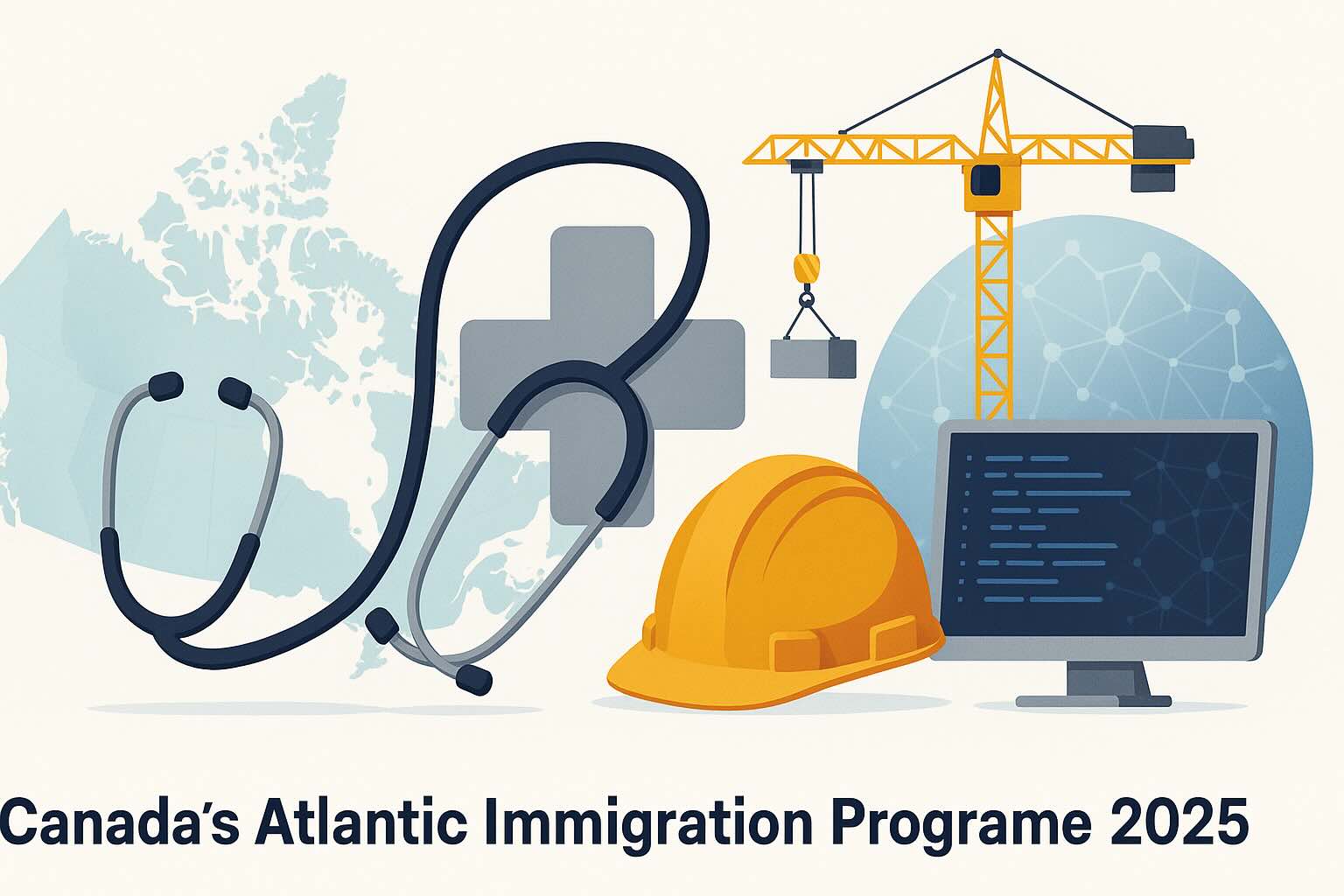
Canada's Atlantic Immigration Program: 2025 Updates See Provinces Prioritize Key Sectors and Occupations
In 2025, Canada's Atlantic Immigration Program (AIP) is entering a new strategic phase due to adjusted federal immigration allocations. To manage reduced quotas, the four Atlantic provinces are concentrating their resources on key sectors vital to their local economies. Healthcare, construction, and information technology have become focal points for attracting talent. This report provides an in-depth analysis of the latest priority sectors and occupations for each province, examines the alternative pathways available in New Brunswick following its AIP pause, and offers authoritative guidance for applicants planning to immigrate through this program in 2025.
08/21/2025

Focusing on Labour Market Needs: Newfoundland and Labrador's Latest Immigration Draw Targets 359 Candidates
On July 10, 2025, Newfoundland and Labrador's Office of Immigration and Multiculturalism (OIM) issued 359 Invitations to Apply (ITAs) for provincial immigration to foreign nationals. Spanning both the Provincial Nominee Program (NLPNP) and the Atlantic Immigration Program (AIP), this draw explicitly requires candidates to hold a job or job offer from a local employer and prioritizes professionals in key fields like healthcare, information technology (ICT), and aquaculture to meet the province's urgent labour market needs.
07/25/2025