
Yukon Opens "Limited A" Licensing Pathway to Family Doctors From Four Countries, Dropping Practice Assessment and Supervision
The Government of Yukon announced on July 22, 2026 that internationally trained family physicians from the United States, the United Kingdom, Ireland and Australia can now be licensed in the territory through a new "Limited A" pathway that removes two long-standing requirements — a practice assessment and a supervised practice period — although applicants must still meet the Yukon Medical Council's other registration requirements and must already hold a specific practice opportunity in the territory. The change was triggered by a General Declaration of Need signed by Minister of Health and Social Services Brad Cathers under the Medical Profession Act and the Medical Profession Registration and Fees Regulation, and is aimed at a family doctor shortage Yukon has struggled with for years; the four source countries were chosen because their medical standards closely align with Canada's, and the list matches exactly the jurisdictions whose training and certification the College of Family Physicians of Canada (CFPC) currently recognizes, with the territory noting that the declaration will automatically extend to any additional countries the CFPC recognizes in future. The move is not an isolated one: Yukon had already partnered with the College of Physicians and Surgeons of British Columbia on a dual licensing application for U.S.-trained doctors on April 30, 2026, and in a separate release on July 23 the territorial government reported that 12 physicians have arrived or are about to arrive since November 2025 — nine already in place and three more due between August and September 2026 — while the territory's primary care waitlist fell from 4,606 people on January 26, 2026 to 2,445 on July 20, a drop of roughly 47 percent. Nationally, Yukon's decision echoes a three-year wave of licensing liberalization in British Columbia, Manitoba, Ontario and elsewhere, and dovetails with the targeted immigration measures for physicians Ottawa unveiled in December 2025. As of publication, Yukon had not released further details on the Limited A pathway or a date for applications to open.
07/29/2026

Quebec to Reopen Family Sponsorship Intake on July 2, with Adult Dependent Children No Longer Counted Against the Cap
The Ministère de l'Immigration, de la Francisation et de l'Intégration (MIFI) has announced that it will reopen intake for family sponsorship applications on July 2, 2026, after the previous round reached its limit, setting a new two-year cap of up to 15,700 sponsorship undertakings, of which 13,300 are reserved for the spousal category and 2,400 for parents and grandparents. Compared with the first round of 13,000 places opened in 2024, the new total is roughly 20% higher, and for the first time adult dependent children aged 18 and older are excluded from the cap. MIFI says it will prioritize earlier-filed applications once intake reopens, and any applications received beyond the limit will not be processed, will be returned as submitted, and will have their fees refunded. Because family reunification for those settling in Quebec follows a process distinct from the rest of Canada, applicants intending to settle in the province must first apply to MIFI for a Quebec Selection Certificate (CSQ) before they can apply to Immigration, Refugees and Citizenship Canada (IRCC) for permanent residence.
06/24/2026

Quebec Confirms PEQ Will Reopen July 2, With No Cap on First Intake Period
Quebec's Ministry of Immigration, Francisation and Integration (MIFI) confirmed in a press release on June 10, 2026 that the Quebec Experience Program (PEQ) will reopen on July 2, 2026 for a two-year window running to July 2, 2028; the first intake period starts at 8:30 a.m. Eastern on July 2 and runs until October 31, 2026, with no cap on applications, and is open to the two groups who already qualified when the program was abolished on November 19, 2025 -- Quebec graduates and temporary foreign workers -- under the same eligibility criteria that applied at the time of the suspension and abolition. The government says that over the remainder of the planning period, it intends to issue a roughly equivalent number of Quebec Selection Certificates (CSQs) between the PEQ and the Skilled Worker Selection Program (PSTQ); until October 31, PSTQ invitations will be reduced accordingly and will mainly target candidates in TEER 4 and 5 occupations and those with less than two years of work experience. MIFI stresses that the reinstatement is temporary, expects 8,000 to 12,000 applications in the first period, and confirms that once the PEQ is finally retired, the permanent selection of skilled workers will be consolidated under the PSTQ.
06/11/2026

Quebec Issues 2,549 Invitations in Fifth PSTQ Draw of 2026, Targeting All Four Streams
Quebec held its fifth skilled-worker selection round of 2026 on June 4, issuing a total of 2,549 invitations to apply (ITAs) for permanent selection across all four streams of its Skilled Worker Selection Program (PSTQ), with every stream drawn from the Arrima pool at 6:00 a.m. on June 1. Stream 1, for highly qualified and specialized skills, led the round with 1,094 invitations—about 42.9% of the total—followed by Stream 2 (intermediate and manual skills) with 756, Stream 3 (regulated professions) with 677, and Stream 4 (exceptional talent) with 22; all streams required candidates to be currently living in Quebec and to meet specific French-language thresholds, continuing the province's recent pattern of favouring workers already established locally and prioritizing French proficiency and in-demand occupations, and marking another sign of an accelerating pace after Quebec issued 2,910 invitations across all of 2025.
06/09/2026

Quebec Updates 2026 Expedited LMIA Processing List for Temporary Foreign Workers
On February 24, 2026, the Government of Quebec released its annually updated list of occupations eligible for expedited Labour Market Impact Assessment (LMIA) processing under the Temporary Foreign Worker Program (TFWP). Marking a significant shift from previous years, the total number of eligible occupations has been scaled back from 76 to 60, with a notable removal of various Information Technology (IT) and engineering professions. Designed to reflect the evolving needs of the provincial labour market, this updated list will remain in effect until February 23, 2027. To ensure a smooth transition for employers and applicants, Quebec has implemented a 30-day grace period—running from February 24 to March 26, 2026—for previously eligible occupations that have been cut from the new roster. Additionally, the province reiterated crucial guidelines regarding the TFWP approval process and recently implemented French-language proficiency requirements.
02/27/2026
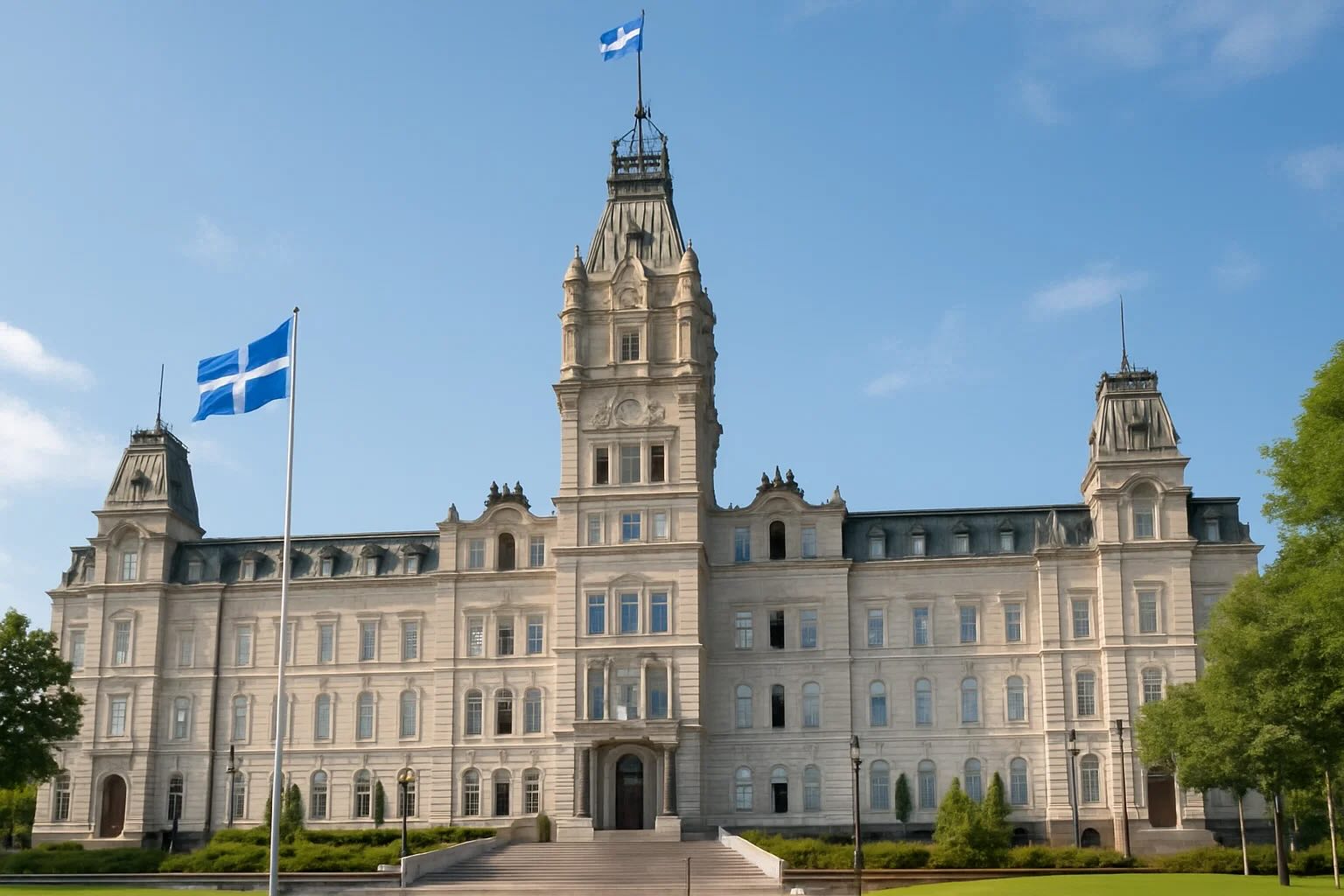
Quebec Announces Closure of Experience Program, Tightening Pathways to Permanent Residence
On November 6, 2025, the Quebec government announced that it will permanently close one of its most popular pathways to permanent residence—the Quebec Experience Program (Programme de l’expérience québécoise, PEQ)—which includes the Quebec Graduates Stream and the Temporary Foreign Workers Stream. Both streams will officially end on November 19, 2025. At the same time, three permanent immigration pilot programs will also conclude as scheduled on January 1, 2026. This means that, going forward, foreign workers and graduates seeking to obtain permanent residence in Quebec will only be able to apply through the Skilled Worker Selection Program (PSTQ).
11/08/2025

Quebec Issues New Round of Invitations Under Skilled Worker Program, Over 200 Candidates Invited
On August 28, 2025, Quebec's Ministry of Immigration, Francization and Integration (MIFI) issued 231 invitations to apply for a Quebec Selection Certificate (CSQ) through its Regular Skilled Worker Program (PSTQ). This round of invitations primarily targeted two specific categories of candidates: highly skilled individuals with work experience outside of regulated professions and those with exceptional talent. The draw takes place against the backdrop of comprehensive immigration policy reforms being developed by the province, highlighting Quebec's current preference for applicants who are already in the province and possess advanced education and specialized skills.
09/12/2025

Yukon's Immigration Program Gets Boost with Increased 2025 Nomination Quota
The Government of Yukon announced on August 21, 2025, that it has successfully secured an additional 67 nomination allocations for its Yukon Nominee Program (YNP), raising the total for the year to 282. The boost follows sustained advocacy on behalf of local employers after initial federal cuts to the program. As a direct result, the territory will issue 80 new Invitations to Apply in August, prioritizing candidates with established ties to the Yukon, including local work experience and graduates from its institutions.
08/25/2025

Quebec Expands PSTQ Invitations, Issuing 273 ITAs in First-Ever Draw for Intermediate and Manual Skills Stream
On July 31, 2025, Quebec’s Ministry of Immigration, Francization and Integration (MIFI) issued 273 invitations to apply for permanent selection through its Skilled Worker Selection Program (PSTQ). This draw is particularly significant as it is the first time the province has specifically targeted candidates under the "Intermediate and Manual Skills" stream, marking a steady expansion of the program's scope. The initiative aims to provide an immigration pathway for workers already in Quebec who possess specific work experience and French-language skills, in order to address labor shortages in various regions of the province.
08/18/2025

Quebec's New Skilled Worker Program (PSTQ) Is Live, Prioritizing In-Province Candidates in First Draw
On July 17, 2025, the province of Quebec launched its new Skilled Worker Selection Program (PSTQ) with its first invitation round since the program's reform in 2024. A total of 238 candidates were invited, with a precise focus on individuals already residing in Quebec who possess French language skills, local educational credentials or work experience, and are in occupations that address labour shortages. This inaugural draw targeted the "Highly qualified and specialized skills" and "Exceptional talent" streams, signaling a definitive policy shift towards prioritizing candidates already integrated into Quebec society.
07/29/2025