
Yukon Opens "Limited A" Licensing Pathway to Family Doctors From Four Countries, Dropping Practice Assessment and Supervision
The Government of Yukon announced on July 22, 2026 that internationally trained family physicians from the United States, the United Kingdom, Ireland and Australia can now be licensed in the territory through a new "Limited A" pathway that removes two long-standing requirements — a practice assessment and a supervised practice period — although applicants must still meet the Yukon Medical Council's other registration requirements and must already hold a specific practice opportunity in the territory. The change was triggered by a General Declaration of Need signed by Minister of Health and Social Services Brad Cathers under the Medical Profession Act and the Medical Profession Registration and Fees Regulation, and is aimed at a family doctor shortage Yukon has struggled with for years; the four source countries were chosen because their medical standards closely align with Canada's, and the list matches exactly the jurisdictions whose training and certification the College of Family Physicians of Canada (CFPC) currently recognizes, with the territory noting that the declaration will automatically extend to any additional countries the CFPC recognizes in future. The move is not an isolated one: Yukon had already partnered with the College of Physicians and Surgeons of British Columbia on a dual licensing application for U.S.-trained doctors on April 30, 2026, and in a separate release on July 23 the territorial government reported that 12 physicians have arrived or are about to arrive since November 2025 — nine already in place and three more due between August and September 2026 — while the territory's primary care waitlist fell from 4,606 people on January 26, 2026 to 2,445 on July 20, a drop of roughly 47 percent. Nationally, Yukon's decision echoes a three-year wave of licensing liberalization in British Columbia, Manitoba, Ontario and elsewhere, and dovetails with the targeted immigration measures for physicians Ottawa unveiled in December 2025. As of publication, Yukon had not released further details on the Limited A pathway or a date for applications to open.
07/29/2026

Atlantic Immigration Program Processing Time Falls 12 Months in a Single Month, Down to 26 Months
The latest figures from Immigration, Refugees and Citizenship Canada (IRCC) show that, as of June 8, 2026, the estimated processing time for new permanent residence (PR) applications under the Atlantic Immigration Program (AIP) stands at 26 months, a full 12 months below the 38 months posted on May 12 and the lowest reading since processing times surged in the fall of 2025. In October 2025, the AIP estimate jumped from 13 months in September to 37 months, a month-over-month increase of 184.6%, and it then hovered between 33 and 40 months for an extended period, far above IRCC's 11-month service standard. Because the dedicated work permits held by AIP applicants are capped at two years and these applicants are ineligible for bridging open work permits (BOWPs), many in-Canada applicants faced losing their authorization to work before a decision could be reached, prompting Atlantic provinces, led by New Brunswick, to step in with letters of support enabling applicants to obtain C18 closed work permits as an emergency stopgap. Despite the sharp improvement, 26 months is still roughly 2.4 times the service standard, and IRCC's inventory holds 12,900 pending AIP applications, about three times the 4,000 admissions targeted for 2026, meaning the backlog pressure is unlikely to ease fundamentally in the near term.
06/12/2026

IRCC May Processing-Time Update: Express Entry and PNP Wait Times Climb Again, While AIP and Citizenship Renunciation Ease
On May 12, 2026, Immigration, Refugees and Citizenship Canada (IRCC) released its updated official processing times for permanent residence and citizenship applications, revealing a split picture in which most economic and citizenship streams lengthened while several family sponsorship and Atlantic categories eased. Under Express Entry, the Federal Skilled Worker Program (FSWP) climbed from six to seven months and the base Provincial Nominee Program (PNP) stretched from 13 to 14 months, with the Canadian Experience Class (CEC) inventory rising by 6,300 in a single month and the base PNP backlog growing by 2,100 — a continuation of the trend that has added more than 20,000 cases to the CEC queue since February 2026. At the same time, the Atlantic Immigration Program (AIP) eased from 40 to 38 months, the Parents and Grandparents Program (PGP) shortened by one month for both inside-Quebec and outside-Quebec applicants, and citizenship renunciation dropped sharply by three months to seven; however, citizenship grants reversed several months of acceleration, climbing from 12 to 13 months as the inventory grew by 7,900 to 321,100 applications, while Quebec's Business Class, the Start-Up Visa and the federal Self-Employed Persons Program all remained stuck at "more than 10 years" or 78 months.
05/13/2026

Canada Conducts Express Entry Draw for Education Professionals, CRS Cut-off Score Drops to 462
On September 17, 2025, Immigration, Refugees and Citizenship Canada (IRCC) held the second-ever Express Entry draw targeting candidates in the "education" category. A total of 2,500 Invitations to Apply (ITA) were issued to candidates with a minimum Comprehensive Ranking System (CRS) score of 462. Compared to the inaugural draw for this category, this round featured a significantly lower cut-off score and a larger number of invitations, reflecting the flexibility and strategic focus of Canada's immigration policy on attracting professionals from specific fields.
09/18/2025

Yukon's Immigration Program Gets Boost with Increased 2025 Nomination Quota
The Government of Yukon announced on August 21, 2025, that it has successfully secured an additional 67 nomination allocations for its Yukon Nominee Program (YNP), raising the total for the year to 282. The boost follows sustained advocacy on behalf of local employers after initial federal cuts to the program. As a direct result, the territory will issue 80 new Invitations to Apply in August, prioritizing candidates with established ties to the Yukon, including local work experience and graduates from its institutions.
08/25/2025
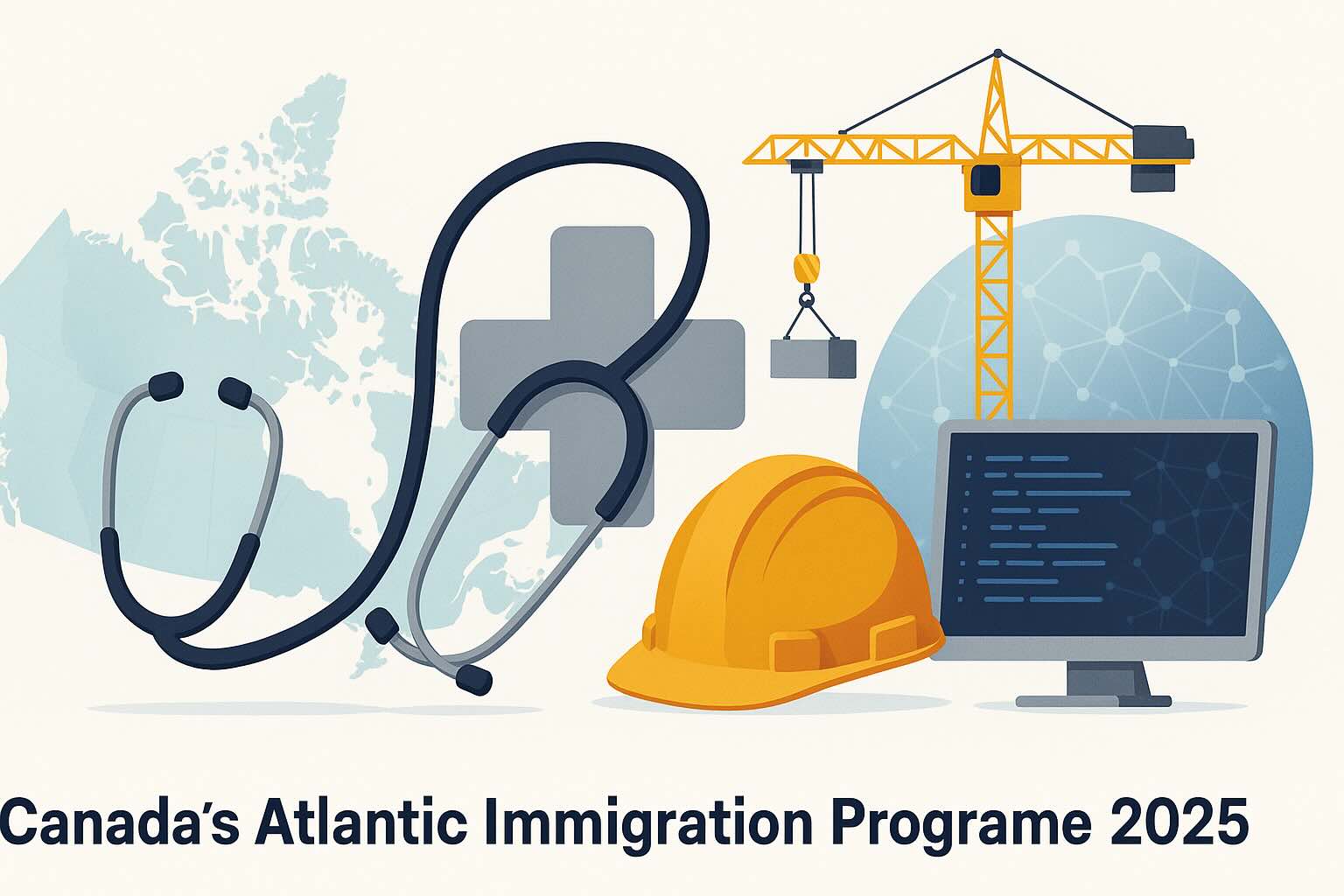
Canada's Atlantic Immigration Program: 2025 Updates See Provinces Prioritize Key Sectors and Occupations
In 2025, Canada's Atlantic Immigration Program (AIP) is entering a new strategic phase due to adjusted federal immigration allocations. To manage reduced quotas, the four Atlantic provinces are concentrating their resources on key sectors vital to their local economies. Healthcare, construction, and information technology have become focal points for attracting talent. This report provides an in-depth analysis of the latest priority sectors and occupations for each province, examines the alternative pathways available in New Brunswick following its AIP pause, and offers authoritative guidance for applicants planning to immigrate through this program in 2025.
08/21/2025

Focusing on Labour Market Needs: Newfoundland and Labrador's Latest Immigration Draw Targets 359 Candidates
On July 10, 2025, Newfoundland and Labrador's Office of Immigration and Multiculturalism (OIM) issued 359 Invitations to Apply (ITAs) for provincial immigration to foreign nationals. Spanning both the Provincial Nominee Program (NLPNP) and the Atlantic Immigration Program (AIP), this draw explicitly requires candidates to hold a job or job offer from a local employer and prioritizes professionals in key fields like healthcare, information technology (ICT), and aquaculture to meet the province's urgent labour market needs.
07/25/2025

Newfoundland and Labrador Continues EOI Invitations Amidst Allocation Adjustments
Newfoundland and Labrador issued 328 Invitations to Apply (ITAs) on May 8, 2025, in its second round of draws through the new Expression of Interest (EOI) system. This system, implemented on February 19, 2025, manages candidates for both the Provincial Nominee Program (NLPNP) and the Atlantic Immigration Program (AIP). Despite facing an initial halving of its federal nomination allocation, the province successfully secured additional spaces, enhancing opportunities for prospective immigrants.
05/20/2025

Prince Edward Island Updates Atlantic Immigration Program: Designates 20 New Employers, Focuses on High-Demand Sectors
Prince Edward Island (PEI) announced on May 15, 2025, an update to its list of designated employers under the Atlantic Immigration Program (AIP). This revision includes the addition of 20 new businesses and the removal of 14 previously recognized employers, bringing the total number of designated employers in the province to 364. Notably, due to reduced federal immigration allocations for 2025 and a high volume of applications, PEI is currently prioritizing applications from workers in high-demand sectors such as healthcare, construction, and manufacturing.
05/19/2025
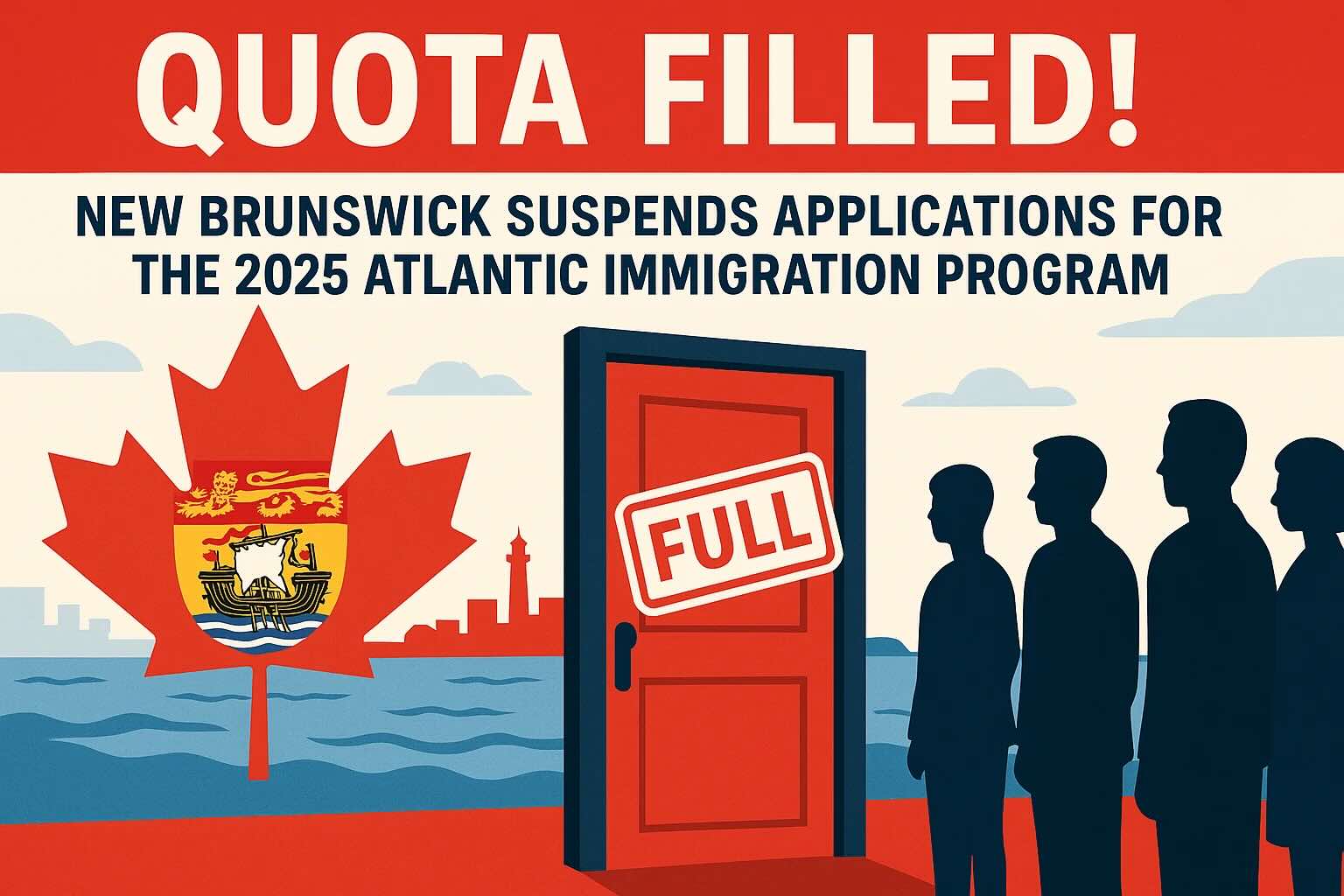
Quota Exhausted. New Brunswick Suspends Acceptance of 2025 Atlantic Immigration Program Applications
Canada's New Brunswick province recently announced the suspension of new provincial endorsement applications for the Atlantic Immigration Program (AIP) for the remainder of 2025, as its annual quota of 1,250 spots was filled by April 4th. This closure occurred significantly earlier than last year, primarily attributed to federal immigration quota reductions and heightened application demand. Individuals aiming to immigrate via AIP can still explore options in the other three Atlantic provinces, though they should be aware of potential sector or occupation-specific restrictions.
04/13/2025