
Canada Issues 3,500 More Express Entry Invitations to Healthcare and Social Services Candidates, With the CRS Cut-Off Holding at 475
On September 4, 2026, Immigration, Refugees and Citizenship Canada (IRCC) held this year's third Express Entry draw targeting healthcare and social services occupations, issuing 3,500 invitations to apply (ITAs) for permanent residence with a minimum Comprehensive Ranking System (CRS) score of 475 — unchanged from the previous healthcare round on June 25 and above the 467 recorded in the category's first round of the year on February 20. The category has now issued 11,500 invitations in 2026. The round was also IRCC's 53rd Express Entry draw of the year, pushing the 2026 total past 126,000 invitations, of which the Canadian Experience Class (CEC) and the French-language proficiency category together account for more than 80 percent — a distribution that reflects Ottawa's current preference for candidates already in Canada while still steering capacity toward shortage occupations. Since IRCC refreshed its category framework on February 19, 2026 and raised the minimum work-experience requirement for renewed categories from six months to one year, healthcare cut-offs have trended higher overall, leaving eligible health and social services workers to reassess both their scores and their timing.
09/05/2026

Quebec to Reopen Family Sponsorship Intake on July 2, with Adult Dependent Children No Longer Counted Against the Cap
The Ministère de l'Immigration, de la Francisation et de l'Intégration (MIFI) has announced that it will reopen intake for family sponsorship applications on July 2, 2026, after the previous round reached its limit, setting a new two-year cap of up to 15,700 sponsorship undertakings, of which 13,300 are reserved for the spousal category and 2,400 for parents and grandparents. Compared with the first round of 13,000 places opened in 2024, the new total is roughly 20% higher, and for the first time adult dependent children aged 18 and older are excluded from the cap. MIFI says it will prioritize earlier-filed applications once intake reopens, and any applications received beyond the limit will not be processed, will be returned as submitted, and will have their fees refunded. Because family reunification for those settling in Quebec follows a process distinct from the rest of Canada, applicants intending to settle in the province must first apply to MIFI for a Quebec Selection Certificate (CSQ) before they can apply to Immigration, Refugees and Citizenship Canada (IRCC) for permanent residence.
06/24/2026

Quebec Confirms PEQ Will Reopen July 2, With No Cap on First Intake Period
Quebec's Ministry of Immigration, Francisation and Integration (MIFI) confirmed in a press release on June 10, 2026 that the Quebec Experience Program (PEQ) will reopen on July 2, 2026 for a two-year window running to July 2, 2028; the first intake period starts at 8:30 a.m. Eastern on July 2 and runs until October 31, 2026, with no cap on applications, and is open to the two groups who already qualified when the program was abolished on November 19, 2025 -- Quebec graduates and temporary foreign workers -- under the same eligibility criteria that applied at the time of the suspension and abolition. The government says that over the remainder of the planning period, it intends to issue a roughly equivalent number of Quebec Selection Certificates (CSQs) between the PEQ and the Skilled Worker Selection Program (PSTQ); until October 31, PSTQ invitations will be reduced accordingly and will mainly target candidates in TEER 4 and 5 occupations and those with less than two years of work experience. MIFI stresses that the reinstatement is temporary, expects 8,000 to 12,000 applications in the first period, and confirms that once the PEQ is finally retired, the permanent selection of skilled workers will be consolidated under the PSTQ.
06/11/2026

Quebec Issues 2,549 Invitations in Fifth PSTQ Draw of 2026, Targeting All Four Streams
Quebec held its fifth skilled-worker selection round of 2026 on June 4, issuing a total of 2,549 invitations to apply (ITAs) for permanent selection across all four streams of its Skilled Worker Selection Program (PSTQ), with every stream drawn from the Arrima pool at 6:00 a.m. on June 1. Stream 1, for highly qualified and specialized skills, led the round with 1,094 invitations—about 42.9% of the total—followed by Stream 2 (intermediate and manual skills) with 756, Stream 3 (regulated professions) with 677, and Stream 4 (exceptional talent) with 22; all streams required candidates to be currently living in Quebec and to meet specific French-language thresholds, continuing the province's recent pattern of favouring workers already established locally and prioritizing French proficiency and in-demand occupations, and marking another sign of an accelerating pace after Quebec issued 2,910 invitations across all of 2025.
06/09/2026

BC PNP Issues 357 Invitations on June 2 as Cut-off Scores Fall Across Care and Construction Categories
On June 2, 2026, the British Columbia Provincial Nominee Program (BCPNP) held its 12th selection round of the year, issuing no fewer than 357 invitations to apply (ITAs) across its Skills Immigration (SI) and Entrepreneur Immigration (EI) categories. The SI draw accounted for 342 invitations targeting early childhood educators, healthcare and veterinary professionals, and construction trades workers under the province's Care and Build priorities announced on April 23, with minimum scores falling by 4 to 10 points across all four categories compared with the May 6 draw. On the entrepreneur side, the EI Base Stream issued 15 invitations—the largest single Base Stream round of 2026. As of June 2, British Columbia has issued 2,485 ITAs through the SI category and no fewer than 64 through the EI category this year.
06/05/2026

Canada Moves Closer to Language Testing for Certain International Mobility Program Work Permit Applicants, With a Canada Gazette Pre-Publication Targeted for Spring or Summer 2026
A regulatory proposal that would introduce language testing for certain International Mobility Program (IMP) work permit applicants is moving closer to formal publication, according to Immigration, Refugees and Citizenship Canada (IRCC). The department's Forward Regulatory Plan, in a page update dated April 7, 2026, now sets a target of spring or summer 2026 for pre-publication of the proposed amendments in Part I of the Canada Gazette, to be followed by a 30-day public comment period. The initiative was first listed in the Forward Regulatory Plan on July 2, 2025, and has since cleared two rounds of stakeholder engagement — consultations with provinces and territories in February 2025 and with private-sector stakeholders in November 2025 — meaning it is no longer a preliminary entry in a federal planning document. The proposal would amend the Immigration and Refugee Protection Regulations to authorize IRCC to require applicants to submit language proficiency test results from a designated third-party organization, with the stated aim of improving the reliability, transparency, and efficiency of language assessments under the IMP. The amendment is not yet in force, no regulatory text is public, and IRCC has not confirmed which IMP streams will be affected, which tests will be accepted, what minimum scores will apply, what exemptions may exist, or when the rule would take effect. Spousal open work permits (SOWPs) are not named by IRCC but are widely regarded by immigration practitioners as the category most likely to be affected. Until the regulatory text is published, no applicant is required to take a language test as a result of this proposal.
05/21/2026

Canadian Healthcare Immigration Advantage: Six Short-Term College Occupations prioritized for Express Entry
Under the targeted selection policies of Immigration, Refugees and Citizenship Canada (IRCC), the healthcare sector has solidified its position as a premier pathway for foreign workers and international students seeking Permanent Residence (PR). Recent policy analysis indicates that not all medical careers require lengthy university education; six specific occupations, requiring only two years or less of college training, are currently being prioritized by the government. Through category-based Express Entry draws, eligible candidates in these fields are receiving invitations to apply with Comprehensive Ranking System (CRS) scores significantly lower than those in general streams.
02/01/2026

Canada Issues 1,000 Invitations to Healthcare and Social Services Workers in First December Category-Based Express Entry Draw
On December 11, 2025, Immigration, Refugees and Citizenship Canada (IRCC) conducted the first category-based Express Entry draw of the month, issuing 1,000 Invitations to Apply (ITAs) to candidates in the healthcare and social services sector. With a minimum Comprehensive Ranking System (CRS) score of 476, the draw highlights Canada’s continued focus on attracting skilled professionals in essential public service fields amid ongoing labour shortages.
12/13/2025

Canada issues new round of Express Entry invitations for Healthcare and Social Services occupations
Immigration, Refugees and Citizenship Canada (IRCC) conducted a new Express Entry draw on November 14, 2025, issuing 3,500 Invitations to Apply (ITAs) to candidates in the Healthcare and Social Services occupations category. The minimum Comprehensive Ranking System (CRS) score required for this draw was 462—the lowest cutoff among the six Healthcare and Social Services draws held this year. This was also the third Express Entry draw of November, highlighting IRCC’s continued priority on recruiting healthcare professionals.
11/15/2025
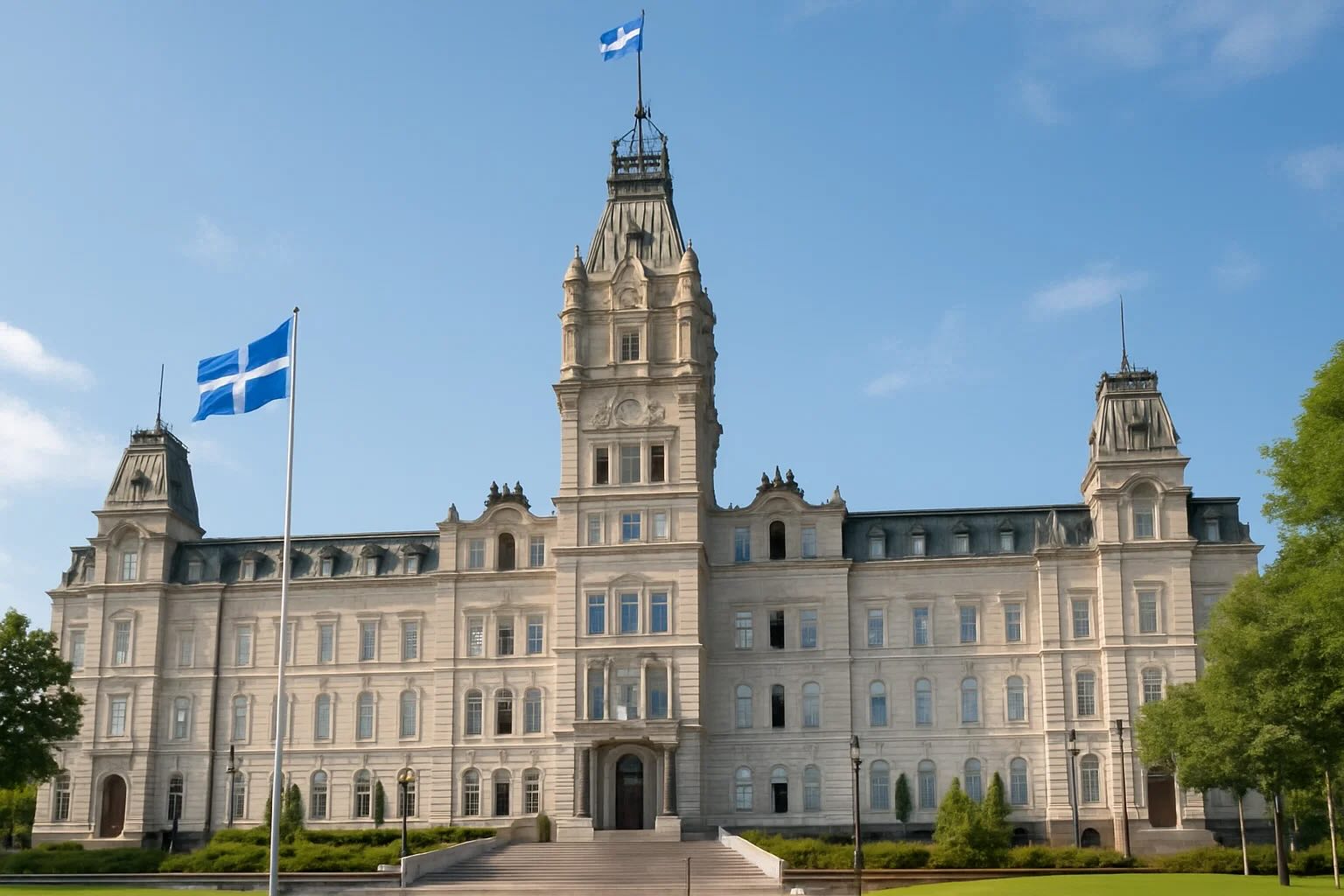
Quebec Announces Closure of Experience Program, Tightening Pathways to Permanent Residence
On November 6, 2025, the Quebec government announced that it will permanently close one of its most popular pathways to permanent residence—the Quebec Experience Program (Programme de l’expérience québécoise, PEQ)—which includes the Quebec Graduates Stream and the Temporary Foreign Workers Stream. Both streams will officially end on November 19, 2025. At the same time, three permanent immigration pilot programs will also conclude as scheduled on January 1, 2026. This means that, going forward, foreign workers and graduates seeking to obtain permanent residence in Quebec will only be able to apply through the Skilled Worker Selection Program (PSTQ).
11/08/2025