
Nova Scotia Will Charge for Provincial Nomination Applications From September 1: CAD $1,000 for Work Streams, $2,000 for Entrepreneur Streams
Nova Scotia announced on its immigration website on August 6, 2026 that it will begin charging application fees under the Nova Scotia Nominee Program (NSNP) on September 1, 2026, setting a flat CAD $1,000 fee for all three work streams and $2,000 for the entrepreneur streams, where until now the province charged nothing at all for a provincial nomination application; the fee applies only to candidates selected from the Expression of Interest (EOI) pool for assessment on or after September 1, leaving anyone who received a selection notice on or before August 31 unaffected, and work stream candidates must pay within seven calendar days of being selected while entrepreneur candidates get either 90 or 180 days depending on the pathway, with any EOI that misses the deadline closed and never assessed; the province's stated reason is that demand for nominations keeps outrunning the annual allocation Ottawa gives it — provincial open data shows the 2026 NSNP allocation at just 2,344 places, down more than 30 percent from 3,570 in 2024, while 7,942 unprocessed NSNP expressions of interest were still sitting in the pool at the end of the second quarter of 2026, roughly 3.4 times the entire year's allocation; submitting an EOI remains free, and the Atlantic Immigration Program (AIP) still carries no provincial application fee.
08/12/2026

Quebec to Reopen Family Sponsorship Intake on July 2, with Adult Dependent Children No Longer Counted Against the Cap
The Ministère de l'Immigration, de la Francisation et de l'Intégration (MIFI) has announced that it will reopen intake for family sponsorship applications on July 2, 2026, after the previous round reached its limit, setting a new two-year cap of up to 15,700 sponsorship undertakings, of which 13,300 are reserved for the spousal category and 2,400 for parents and grandparents. Compared with the first round of 13,000 places opened in 2024, the new total is roughly 20% higher, and for the first time adult dependent children aged 18 and older are excluded from the cap. MIFI says it will prioritize earlier-filed applications once intake reopens, and any applications received beyond the limit will not be processed, will be returned as submitted, and will have their fees refunded. Because family reunification for those settling in Quebec follows a process distinct from the rest of Canada, applicants intending to settle in the province must first apply to MIFI for a Quebec Selection Certificate (CSQ) before they can apply to Immigration, Refugees and Citizenship Canada (IRCC) for permanent residence.
06/24/2026

Quebec Confirms PEQ Will Reopen July 2, With No Cap on First Intake Period
Quebec's Ministry of Immigration, Francisation and Integration (MIFI) confirmed in a press release on June 10, 2026 that the Quebec Experience Program (PEQ) will reopen on July 2, 2026 for a two-year window running to July 2, 2028; the first intake period starts at 8:30 a.m. Eastern on July 2 and runs until October 31, 2026, with no cap on applications, and is open to the two groups who already qualified when the program was abolished on November 19, 2025 -- Quebec graduates and temporary foreign workers -- under the same eligibility criteria that applied at the time of the suspension and abolition. The government says that over the remainder of the planning period, it intends to issue a roughly equivalent number of Quebec Selection Certificates (CSQs) between the PEQ and the Skilled Worker Selection Program (PSTQ); until October 31, PSTQ invitations will be reduced accordingly and will mainly target candidates in TEER 4 and 5 occupations and those with less than two years of work experience. MIFI stresses that the reinstatement is temporary, expects 8,000 to 12,000 applications in the first period, and confirms that once the PEQ is finally retired, the permanent selection of skilled workers will be consolidated under the PSTQ.
06/11/2026

Quebec Issues 2,549 Invitations in Fifth PSTQ Draw of 2026, Targeting All Four Streams
Quebec held its fifth skilled-worker selection round of 2026 on June 4, issuing a total of 2,549 invitations to apply (ITAs) for permanent selection across all four streams of its Skilled Worker Selection Program (PSTQ), with every stream drawn from the Arrima pool at 6:00 a.m. on June 1. Stream 1, for highly qualified and specialized skills, led the round with 1,094 invitations—about 42.9% of the total—followed by Stream 2 (intermediate and manual skills) with 756, Stream 3 (regulated professions) with 677, and Stream 4 (exceptional talent) with 22; all streams required candidates to be currently living in Quebec and to meet specific French-language thresholds, continuing the province's recent pattern of favouring workers already established locally and prioritizing French proficiency and in-demand occupations, and marking another sign of an accelerating pace after Quebec issued 2,910 invitations across all of 2025.
06/09/2026

Nova Scotia Taps Express Entry to Match Skilled Workers With Employers Facing Critical Vacancies
Nova Scotia has launched a new initiative called "Critical Vacancies" and begun sending Notices of Interest (NOIs) to candidates in the federal Express Entry pool, with the aim of connecting qualified foreign skilled workers to local employers who have been unable to fill roles domestically. For now the initiative covers only two sectors with long-standing labour shortages — construction and healthcare — and while the province has uploaded dedicated forms for six construction occupations, it has not yet named any specific healthcare occupations. Candidates need only hold an active Express Entry profile to receive an NOI, with no requirement for Canadian or Nova Scotia work experience. Crucially, an NOI is neither an invitation to apply (ITA) for provincial nomination under the Provincial Nominee Program (PNP) nor an endorsement under the Atlantic Immigration Program (AIP); it functions instead as a bridge between job seekers and employers, though candidates who land a job offer through this channel are typically better positioned for a subsequent federal or provincial immigration pathway — and some may even receive an ITA directly in their Express Entry account. The move aligns with the provincial nomination priorities Nova Scotia announced in April 2026, and is the latest step in an immigration system the province has been steadily reshaping since late 2025.
05/22/2026

Nova Scotia Overhauls Provincial Nominee and AIP Selection System with New EOI Model
On November 28, 2025, Nova Scotia announced a major shift in its immigration intake system, confirming that all submissions under the Nova Scotia Provincial Nominee Program (NSPNP) and the Atlantic Immigration Program (AIP) will now be processed through an Expression of Interest (EOI) model. Under the new rules, all submissions—regardless of submission date—are considered EOIs, and having a case ID or meeting eligibility criteria no longer guarantees file processing. The province will conduct periodic draws based on current labor market and economic priorities, with priority sectors such as healthcare, construction, trades, STEM, natural resources, and manufacturing. The shift aligns with broader trends driven by reduced provincial nomination allocations from IRCC. With increased immigration targets set for 2026, applicants may soon see improved chances of receiving selections.
12/03/2025
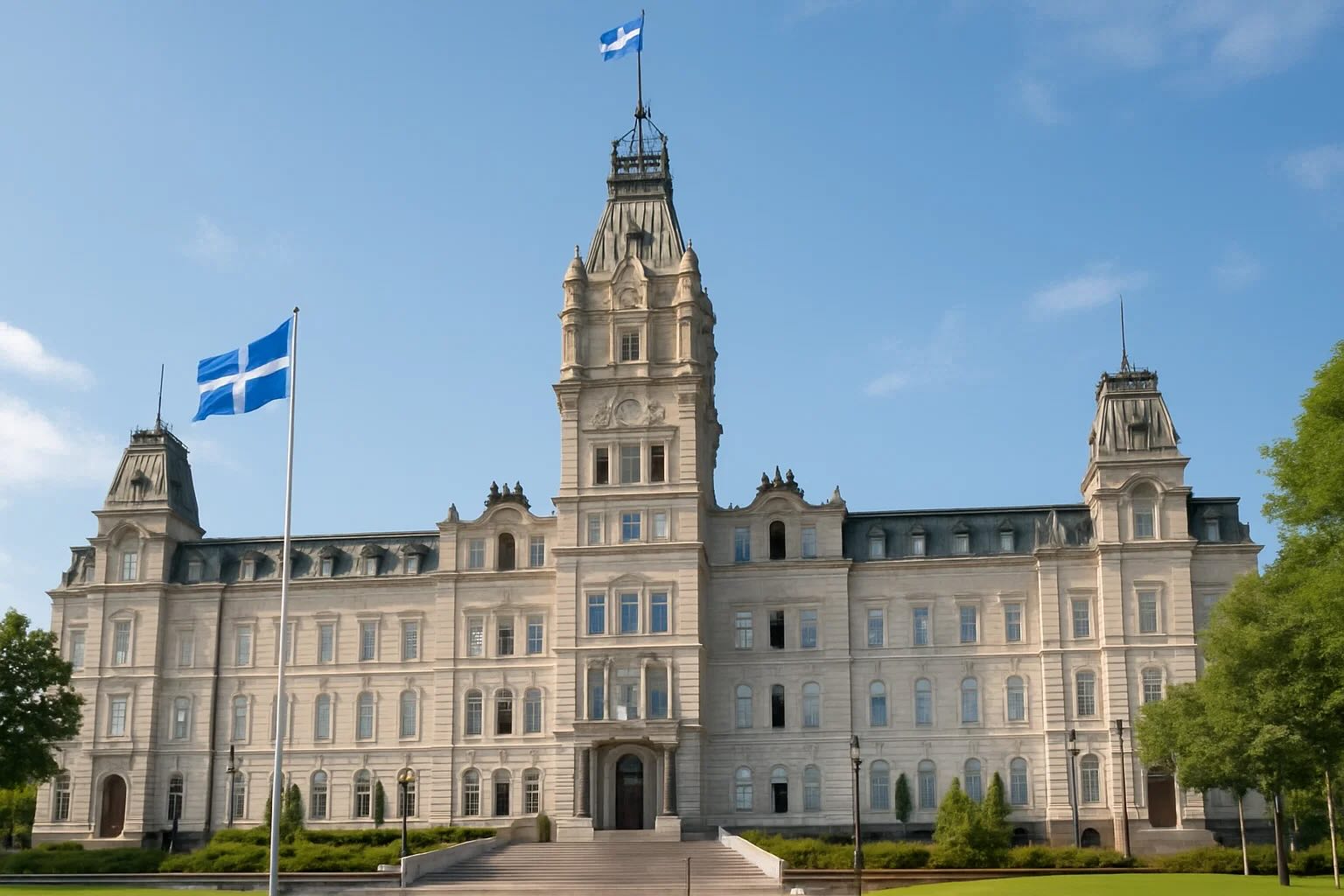
Quebec Announces Closure of Experience Program, Tightening Pathways to Permanent Residence
On November 6, 2025, the Quebec government announced that it will permanently close one of its most popular pathways to permanent residence—the Quebec Experience Program (Programme de l’expérience québécoise, PEQ)—which includes the Quebec Graduates Stream and the Temporary Foreign Workers Stream. Both streams will officially end on November 19, 2025. At the same time, three permanent immigration pilot programs will also conclude as scheduled on January 1, 2026. This means that, going forward, foreign workers and graduates seeking to obtain permanent residence in Quebec will only be able to apply through the Skilled Worker Selection Program (PSTQ).
11/08/2025
Canada's Atlantic Immigration Program: 2025 Updates See Provinces Prioritize Key Sectors and Occupations
In 2025, Canada's Atlantic Immigration Program (AIP) is entering a new strategic phase due to adjusted federal immigration allocations. To manage reduced quotas, the four Atlantic provinces are concentrating their resources on key sectors vital to their local economies. Healthcare, construction, and information technology have become focal points for attracting talent. This report provides an in-depth analysis of the latest priority sectors and occupations for each province, examines the alternative pathways available in New Brunswick following its AIP pause, and offers authoritative guidance for applicants planning to immigrate through this program in 2025.
08/21/2025

Quebec Expands PSTQ Invitations, Issuing 273 ITAs in First-Ever Draw for Intermediate and Manual Skills Stream
On July 31, 2025, Quebec’s Ministry of Immigration, Francization and Integration (MIFI) issued 273 invitations to apply for permanent selection through its Skilled Worker Selection Program (PSTQ). This draw is particularly significant as it is the first time the province has specifically targeted candidates under the "Intermediate and Manual Skills" stream, marking a steady expansion of the program's scope. The initiative aims to provide an immigration pathway for workers already in Quebec who possess specific work experience and French-language skills, in order to address labor shortages in various regions of the province.
08/18/2025
Nova Scotia Adjusts PNP Processing to Prioritize In-Province Applicants in Key Sectors
Nova Scotia's immigration authority issued an official notice on July 16, announcing an adjustment to its Provincial Nominee Program (NS PNP) application processing strategy. As the number of applications for 2025 has reached the annual allocation limit set by the federal government, the province has decided to shift its processing focus for the remainder of the year to applicants already working in the province whose work permits are set to expire in 2025, with a particular emphasis on professionals in the healthcare and construction sectors. This adjustment is a direct response to the federal government's reduced 2025 PNP allocation and will significantly impact various categories of applicants.
07/28/2025