
Atlantic Immigration Program Processing Time Falls 12 Months in a Single Month, Down to 26 Months
The latest figures from Immigration, Refugees and Citizenship Canada (IRCC) show that, as of June 8, 2026, the estimated processing time for new permanent residence (PR) applications under the Atlantic Immigration Program (AIP) stands at 26 months, a full 12 months below the 38 months posted on May 12 and the lowest reading since processing times surged in the fall of 2025. In October 2025, the AIP estimate jumped from 13 months in September to 37 months, a month-over-month increase of 184.6%, and it then hovered between 33 and 40 months for an extended period, far above IRCC's 11-month service standard. Because the dedicated work permits held by AIP applicants are capped at two years and these applicants are ineligible for bridging open work permits (BOWPs), many in-Canada applicants faced losing their authorization to work before a decision could be reached, prompting Atlantic provinces, led by New Brunswick, to step in with letters of support enabling applicants to obtain C18 closed work permits as an emergency stopgap. Despite the sharp improvement, 26 months is still roughly 2.4 times the service standard, and IRCC's inventory holds 12,900 pending AIP applications, about three times the 4,000 admissions targeted for 2026, meaning the backlog pressure is unlikely to ease fundamentally in the near term.
06/12/2026

Newfoundland and Labrador Opts Into Federal Rural TFWP Policy, Lifting Low-Wage Foreign Worker Cap to 15%
Newfoundland and Labrador has become the latest province to opt into the federal government's temporary public policy giving rural employers more flexibility to hire low-wage temporary foreign workers under the Temporary Foreign Worker Program (TFWP), according to a federal webpage update on June 2. The policy, in force since April 1, 2026, will see Newfoundland and Labrador adopt both available measures across all sectors: eligible rural employers may retain their existing share of low-wage temporary foreign workers even where it already exceeds the 10% cap, and may apply a 15% cap rather than the standard 10% on the proportion of low-wage positions filled by foreign workers. The measures take effect provincially on June 11 and are expected to remain in place until March 31, 2027. Only employers located outside Statistics Canada–defined census metropolitan areas qualify, and those that fail to meet all regular TFWP requirements—including proving efforts to recruit Canadian citizens and permanent residents first—are excluded; British Columbia, Manitoba, New Brunswick, Nova Scotia and Quebec have already opted in, while Alberta and Nunavut are not participating.
06/04/2026

IRCC May Processing-Time Update: Express Entry and PNP Wait Times Climb Again, While AIP and Citizenship Renunciation Ease
On May 12, 2026, Immigration, Refugees and Citizenship Canada (IRCC) released its updated official processing times for permanent residence and citizenship applications, revealing a split picture in which most economic and citizenship streams lengthened while several family sponsorship and Atlantic categories eased. Under Express Entry, the Federal Skilled Worker Program (FSWP) climbed from six to seven months and the base Provincial Nominee Program (PNP) stretched from 13 to 14 months, with the Canadian Experience Class (CEC) inventory rising by 6,300 in a single month and the base PNP backlog growing by 2,100 — a continuation of the trend that has added more than 20,000 cases to the CEC queue since February 2026. At the same time, the Atlantic Immigration Program (AIP) eased from 40 to 38 months, the Parents and Grandparents Program (PGP) shortened by one month for both inside-Quebec and outside-Quebec applicants, and citizenship renunciation dropped sharply by three months to seven; however, citizenship grants reversed several months of acceleration, climbing from 12 to 13 months as the inventory grew by 7,900 to 321,100 applications, while Quebec's Business Class, the Start-Up Visa and the federal Self-Employed Persons Program all remained stuck at "more than 10 years" or 78 months.
05/13/2026

Canada Eases Hiring Limits for Low-Wage Temporary Foreign Workers in Rural Areas
The Canadian federal government has announced a temporary easing of rules for rural employers using the low-wage stream of the Temporary Foreign Worker Program (TFWP) from April 1, 2026, to March 31, 2027. Under the new policy, eligible rural employers in participating provinces and territories will not only be allowed to maintain their current number of low-wage temporary foreign workers, but will also be able to increase the cap on these workers from 10% to 15% of their total workforce. The move is being seen as a targeted policy adjustment aimed at addressing persistent labour shortages in rural and remote communities. However, the measure will apply only in provinces and territories that choose to participate, and the federal government has not yet released a list of those jurisdictions.
03/14/2026

Deep Dive into Canada’s Post-Graduation Work Permit (PGWP): Avoiding Common Pitfalls and Mastering New Policy Requirements
For the vast majority of international students in Canada, the Post-Graduation Work Permit (PGWP) serves as a critical bridge to permanent residency. However, even applicants familiar with basic eligibility criteria may face obstacles by overlooking subtle nuances within the internal assessment standards of Immigration, Refugees and Citizenship Canada (IRCC). According to internal operational instructions used by IRCC officers, the success of an application often hinges on details that are frequently neglected, including the precise application window, the calculation of study permit validity, the accurate declaration of Designated Learning Institutions (DLIs), and proof of continuous full-time student status. Furthermore, with the implementation of new policies on November 1, 2024, language proficiency scores and field-of-study requirements have become new focal points for review. This article combines internal immigration documents with the latest policy updates to comprehensively outline the critical factors applicants must consider when applying for a PGWP, helping to mitigate risks and improve approval probabilities.
02/14/2026

IRCC Confirms Freeze on PGWP-Eligible Field of Study List for 2026
Immigration, Refugees and Citizenship Canada (IRCC) officially confirmed on January 15, 2026, that it will freeze the list of educational programs eligible for the Post-Graduation Work Permit (PGWP) for the entirety of 2026, with no updates or adjustments scheduled. This means that for the remainder of the year, there will be no additions or removals to the existing list of eligible fields. Previously, the government had indicated in 2025 a plan to overhaul the list in "early 2026," but the latest announcement indicates this plan has been put on hold. For international students currently planning to apply for a PGWP, this policy shift provides increased certainty.
01/16/2026
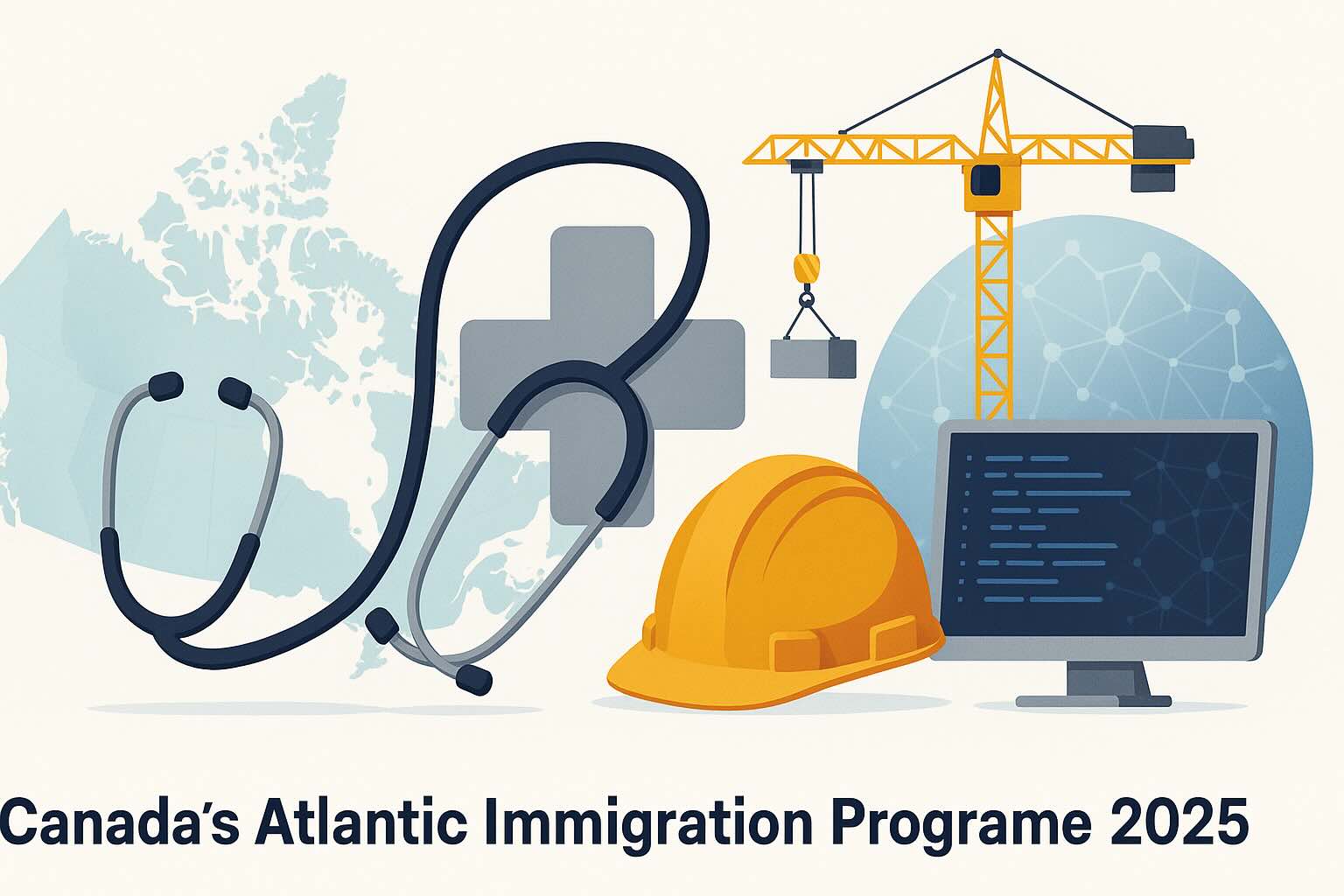
Canada's Atlantic Immigration Program: 2025 Updates See Provinces Prioritize Key Sectors and Occupations
In 2025, Canada's Atlantic Immigration Program (AIP) is entering a new strategic phase due to adjusted federal immigration allocations. To manage reduced quotas, the four Atlantic provinces are concentrating their resources on key sectors vital to their local economies. Healthcare, construction, and information technology have become focal points for attracting talent. This report provides an in-depth analysis of the latest priority sectors and occupations for each province, examines the alternative pathways available in New Brunswick following its AIP pause, and offers authoritative guidance for applicants planning to immigrate through this program in 2025.
08/21/2025

Focusing on Labour Market Needs: Newfoundland and Labrador's Latest Immigration Draw Targets 359 Candidates
On July 10, 2025, Newfoundland and Labrador's Office of Immigration and Multiculturalism (OIM) issued 359 Invitations to Apply (ITAs) for provincial immigration to foreign nationals. Spanning both the Provincial Nominee Program (NLPNP) and the Atlantic Immigration Program (AIP), this draw explicitly requires candidates to hold a job or job offer from a local employer and prioritizes professionals in key fields like healthcare, information technology (ICT), and aquaculture to meet the province's urgent labour market needs.
07/25/2025

Newfoundland and Labrador Continues EOI Invitations Amidst Allocation Adjustments
Newfoundland and Labrador issued 328 Invitations to Apply (ITAs) on May 8, 2025, in its second round of draws through the new Expression of Interest (EOI) system. This system, implemented on February 19, 2025, manages candidates for both the Provincial Nominee Program (NLPNP) and the Atlantic Immigration Program (AIP). Despite facing an initial halving of its federal nomination allocation, the province successfully secured additional spaces, enhancing opportunities for prospective immigrants.
05/20/2025

Prince Edward Island Updates Atlantic Immigration Program: Designates 20 New Employers, Focuses on High-Demand Sectors
Prince Edward Island (PEI) announced on May 15, 2025, an update to its list of designated employers under the Atlantic Immigration Program (AIP). This revision includes the addition of 20 new businesses and the removal of 14 previously recognized employers, bringing the total number of designated employers in the province to 364. Notably, due to reduced federal immigration allocations for 2025 and a high volume of applications, PEI is currently prioritizing applications from workers in high-demand sectors such as healthcare, construction, and manufacturing.
05/19/2025